Home Blog Page 14624

S&P Crosses 2100 for the 31st Time Since February

Ping Pong for the S&P 500

It’s been a game of ping pong at the 2100 line for the S&P 500 (NYSEARCA:SPY), and the ball is back in the upper court. The longest period of time any level above 2100 has been sustained has been 3 weeks from mid May to June. This is the 31st time that the line has been crossed, either up or down.

The move came a bit unexpectedly as a sudden surge of buying hit the markets for a whole hour between 10 and 11am pushing the index up nearly a whole percent in that time frame. Also suprisingly, the VIX, or Volatility Index, commonly known as the Fear Index, still edged up 1.5% despite overall stock gains.

Gold stocks outperformed today, with the majors (NYSEARCA:GDX) closing up close to 4% but gold (NYSEARCA:GLD) up only 0.25% by comparison. The rest of the commodity complex continued to underperform with oil closing the day below $42 and major oil ETFs like the US Oil Fund (NYSEARCA:USO) reaching new lows, with no relief in sight for the energy sector.

Leading oil stock Exxon Mobil (NYSE:XOM) ended the day with respectable gains despite the gloom, trading up 0.5%, unlike its competitor Chevron (NYSE:CVX), which lost 2%.

On the docket for tomorrow are housing starts, which will be published an hour before market open at 8:30am, as well as the CPI and Core CPI, with market analysts expecting a 0.2% gain in inflation. The CPI figure could be indicative of a possible September rate hike, as the higher the number is, the higher the chances of the Federal Reserve hiking its target overnight right by 25 basis points by then.


Story continues below

Mixed Signals or History Repeating for the Market?

Mixed Signals for the Stock Market


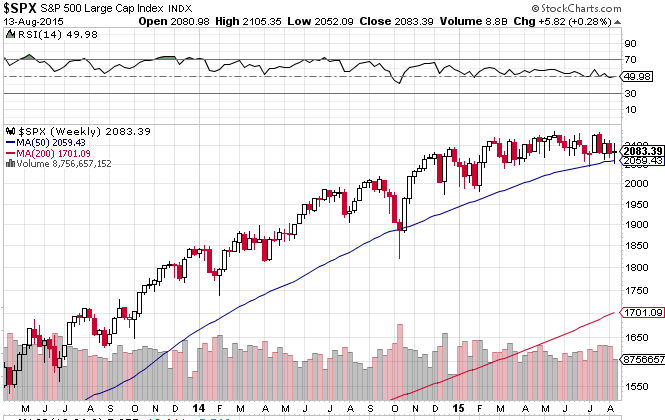
If you want to see a chart that looks a lot like tiptoeing on the edge of a cliff, take a look at the weekly chart of the S&P 500 (NYSEARCA:SPY).

S&P Weekly ChartThe blue line is the 50 day moving average. The last time it was tested was in October. It has now been tested five times in the last seven weeks. Its slope is also flattening, meaning the longer it is tested, the easier it is to break through the line.

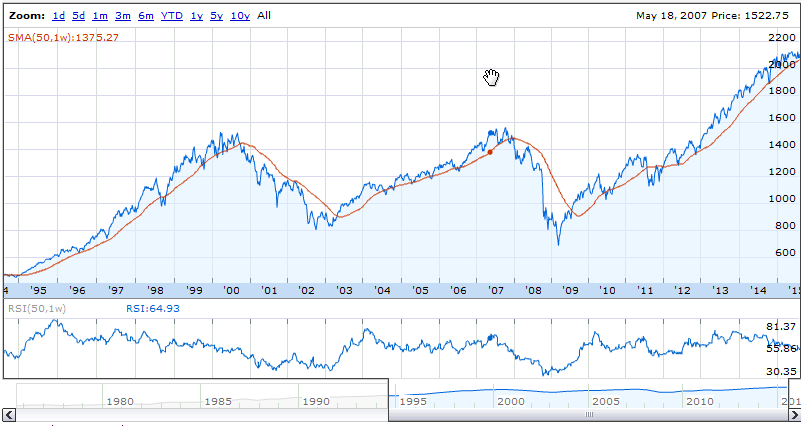
How important is the 50 DMA? Here’s a look at a longer term chart of the S&P to gain a wider perspective on the 50 DMA and its correlation with bear markets.

Long Term S&P ChartFrom 1995 to 2000, the 50 DMA was tested 7 times on a monthly basis. The last 4 tests were spaced by about 6 months. After that, the 2000 to 2002 bear market began. The market finally regained the 50 DMA once again in mid 2003. During the bull market from 2003 to 2007, the 50 DMA was tested 8 times, with the last 3 tests coming within a space of 5 months. Then began the 2008 to 2009 bear market.

Since bear market bottom in March 2009, the 50 DMA has been tested 6 times, counting the 2011 break as one, and the weekly tests are becoming more frequent now. Only time will tell if this is the top for the current cycle, but it’s looking more likely by the day.

After yesterday’s largest turnaround by percentage in stocks for three years, equities fell sharply in the final hour of trading on high volume, signaling a probable lower open tomorrow.

Meanwhile, mixed signals are everywhere as the Atlanta Fed has forecast Q3 GDP growth at just 0.7%, as weekly unemployment claims continue to rival the 2000 trough. Then again, perhaps the signals are not so mixed, as that unemployment trough came one month after the 2000 NASDAQ (Nasdaqgm:QQQ) top was already in.

Story continues below

Oramed is about to Revolutionize Diabetes Treatment

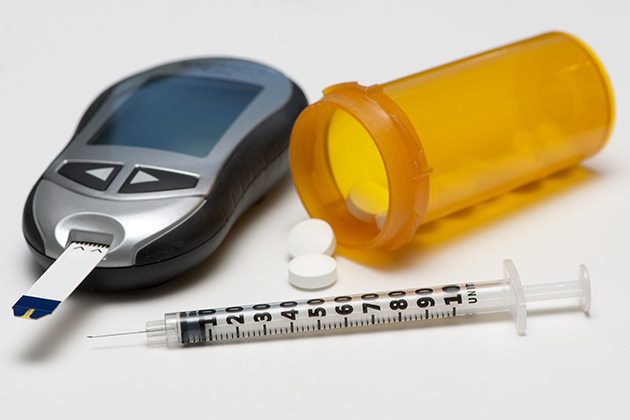
glucometer_shutterstock_171265739

Data reported this month revealed  that the market for human insulin generated a little over $24 billion during 2014. Over the next five years, the data suggests a compound annual growth rate of nearly 13%, putting the 2020 industry valuation at $49 billion.

For a company with a market capitalization of less than $100 million, targeting a $50 billion market might sound overly ambitious. Not so, says Israel-based Oramed Pharmaceuticals Inc. (NASDAQ:ORMP). Oramed is not just targeting the human insulin market but is doing so with a treatment that, if approved, could be revolutionary. The company is developing an oral delivery insulin pill, initially targeting type I and type II diabetes. In doing so, it is in direct competition with Novo Nordisk A/S (NYSE:NVO), which at last close had a market valuation of $147 billion, and last year generated $13 billion net sales, $10 billion of which came from its diabetes related products. Despite this, however, Oramed is leading the race.

On June 30, 2015, the company announced it had enrolled its first patient in a phase IIb study of its oral insulin pill, which it calls ORMD-0801. The study will see circa 180 type II diabetes patients undergo 28 days of treatment at a minimum of 30 sites across the US, with the primary endpoints of evaluating both safety and efficacy of ORMD-0801. The company announced topline results from a phase IIa study of the same indication early last year, which demonstrated the treatment as being both safe and well tolerated. In addition, Oramed reported a reduction in glucose concentrations across patients in two dose groups across all three areas of testing (mean daytime, nighttime and fasting concentrations).

The way these things work is the FDA will often request a small-scale study (the phase IIa) to support the case for a wider scale evaluation. In this instance, a phase IIa study ORMD-0801 across 30 patient base on a seven-day timeframe. The goal now is to replicate the outcome of this result across the six times multiplied patient base slated for the already commenced phase IIb. Two things stand out as being attractive from an investment standpoint related to this trial. The first, that it has a 28-day administration period. In the grand scheme of biotech, this is miniscule. It should mean we get topline results within a maximum of 12 weeks – assuming everything runs smoothly. The second, that if the trial meets its endpoints, funding is already in place to carry ORMD-0801 through to approval. The company announced on July 7, that it was negotiating a deal with Sinopharm, the biggest healthcare group in China, and Hefei, a pharmaceutical investment business, there could be worth up to $50 million. Breaking this down, Sinopharm and Hefei will take a combined stake in Oramed worth about $12 million, and Oramed will give the two companies exclusive Chinese rights to ORMD-0801 for $38 million. $18 million due on completion, and 20 million due on the release of topline results.

Novo is yet to announce the commencing of its own phase IIb for its oral administration insulin equivalent. At the same time, Oramed has kicked off enrollment and is closing in on global licensing deals worth more than 50% of its entire market capitalization.

And that’s not all. As we mentioned in the introduction, the company is also investigating the treatment for a diabetes type I indication – with a phase IIa completed during Q3 last year. As with the type II indication, this study demonstrated safety and efficacy across a small sample size, and the company intends to expand this sample in a phase IIb during 2017.

Looking at things from a financial perspective, the company has no debt, cash and equivalents of a little over $26 million (not taking into account the potential injection from the Chinese rights deal) and a fully diluted share count of 14.5 million.

So what’s the takeaway here? Well, before we get carried away, we must point out that Oramed is a development stage biotech company that is yet to generate revenues from any of its candidate therapies. The road to FDA approval is littered with pitfalls, and can be unexpectedly costly. However, with this said, Oramed is about as risk mitigating as it can get. Financially sound, with what could be a revolutionary treatment in a multicenter, US-based phase II for and targeting a market worth many multiples of its current valuation – qualities not often seen at this end of the market cap scale.

More from Market Exclusive:

  1. What Is the Real Cost of AstraZeneca’s Eye Cancer Flop?
  2. Frost Closes SciVac Deal, A Potential Blockbuster Lineup in Hepatitis?
  3. Could This Treatment Replace Morphine in the US?

Story continues below

China Devalues Again, Market Very Confused

Market Confused

The narrow 5% trading range in place on the S&P 500 (NYSEARCA:SPY) since February remains as the market ended the day unchanged after a wild session. Questions as to what if anything is driving market direction continue to intensify.

Yesterday, China’s 1.9% devaluation of its currency drove markets down across the world in confusion. Today, China’s second devaluation in as many days at first drove markets lower, but the Dow (NYSEARCA:DIA) clawed back up to exactly where it opened. Major support at 2040 on the S&P is now a crucial support zone in place for 6 months.

Gold (NYSEARCA:GLD) continued higher on its fifth consecutive day of gains, up to $1125 an ounce from a low of $1072, for a gain of 5% in a week. Miners in particular had a very strong day, with large cap gold miners like Newmont (NYSE:NEM) up 6.5% on the day. Goldcorp (NYSE:GG) and Barrick Gold (NYSE:ABX) were both up over 5%.

The gains in the metals were reflected by a strong selloff in the dollar index (NYSEARCA:UUP). A dollar selloff happening in the midst of a double Chinese devaluation belies particular weakness in the world’s reserve currency.

With stocks showing no particular sustained trend, day to day volatility seems to be the order of the day until either the uptrend is restored on new highs or the market breaks sharply lower. What ultimately happens may depend on whether the Fed raises interest rates in September as many are forecasting, or if they postpone the proposed first rate hike in 9 years to some other unspecified time.

Catalysts tomorrow include weekly initial unemployment claims due an hour before market open, as well as retail sales, with the consensus estimate at a 0.5% increase.

Stay tuned as the coil continues to tighten. The tighter the trading range, the more sensitive to incoming economic data equities may become.

Story continues below

Market Inefficiency Has Created an Opportunity in Karyopharm

Biotech

At the beginning of this week, we learned that a number of patients in an ongoing Karyopharm Therapeutics, Inc. (NASDAQ:KPTI) had developed sepsis. On the news, premarket, shares dropped close to 30% and having recovered slightly during the US session on Monday, have since declined further to trade a little over 40% down on last week’s close. The information came as part of the company’s latest financial report, and relates to the mid-stage trial of selinexor – a therapeutic the company is currently trialing for the treatment of acute myeloid leukemia, or AML. Now, obviously, such a development can only be construed as a negative event for the company, but there is an argument that the market response we have seen is an exaggerated one. As such, they may be an opportunity to get in at a discount on what might just turn out to be, looking back, a minor setback for Karyopharm. Let’s look at why.

First, let’s address the details of the situation. This study in question is called SOPRA (Selinexor in Older Patients with Relapsed/Refractory AML), and kicked off across 40 centers in June last year. It is a 2 to 1 randomization trial that is blind against three alternative AML treatments – this basically means that a physician administers one of four treatments (one of which is selinexor) to a patient, but with a weighted proportion of 50% towards selinexor. Sepsis is pretty common in sufferers of AML, but obviously, any increase in sepsis prevalence would class as an adverse reaction to selinexor. Therefore, with the trial modelled as such, we would expect a sepsis prevalence in patients treated with selinexor twice as high as those treated with one of the alternative therapies. At the end of July this year, there had been reports of sepsis in seven patients receiving selinexor, compared with just two reports from two patients in the other arms. In other words, what should be 2 to 1 looks – at this time anyway – to be coming in at 4 to 1.

However, the key point here is that this is not the end of the trial. The company has amended its dosage to fall in line with a dosage issued during the phase 1 safety and tolerability trial, and continued otherwise as is. What was once a tailored dose of 55 mg/m² (body surface area) is now a standard 60 mg issue per patient – which translates to (on average) about a 25% reduction. So with this said, the question becomes can selinexor be effective at this reduced dose? Further, can the reduced dose translate to a reduction in sepsis events? And herein lies the opportunity. The company is currently undertaking a separate trial (phase 1) for selinexor in hematologic malignancies. As part of this trial, it is using two dose levels – and accordingly, these doses line up with both the previously used dosage (high) and the amended dosage (low) in the SOPRA study. In this second trial, so far at least, the lower dosage indication has not reported any out of the norm sepsis levels, and – even more importantly – interim data suggests patients are responding to selinexor at these levels. So, to reiterate the situation, Karyopharm has reduced the dosage of its SOPRA study to bring it in line with dosage levels in another of its studies at which patients look to be responding to treatment. In other words, yes there has been an adverse reaction at the current dosage, but this has now been reduced and (assuming we can get efficacy) this reaction will mean nothing longer-term.

Now, the question remains, if we are looking to enter at the circa 40% discount currently available on the assumption that the lower dosage will prove effective, when will be see vindication of this assumption? Well, in line with the dosage amendment, the company expects interim assessment by mid-2016. Topline data is expected during the last three months of next year.

So what’s the takeaway here? Well, markets have responded to the recent announcement in the same way they might respond to a trial being pulled completely when, in fact, the trial could very well go on to complete as expected – albeit at a lower dose. This has introduced an apparent inefficiency in Karyopharm’s market capitalization, and one that a risk-on investor might want to take advantage of.

More from Market Exclusive:

  1. What Is the Real Cost of AstraZeneca’s Eye Cancer Flop?
  2. Frost Closes SciVac Deal, A Potential Blockbuster Lineup in Hepatitis?
  3. AstraZeneca Drops Another $700 Million In Bid To Lead Oncology

Story continues below

China Devalues, Markets Fall, VIX Spikes, Gold Up

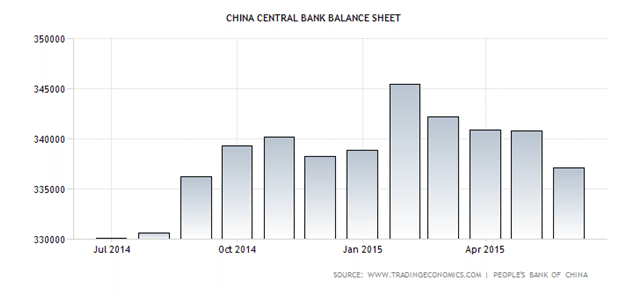
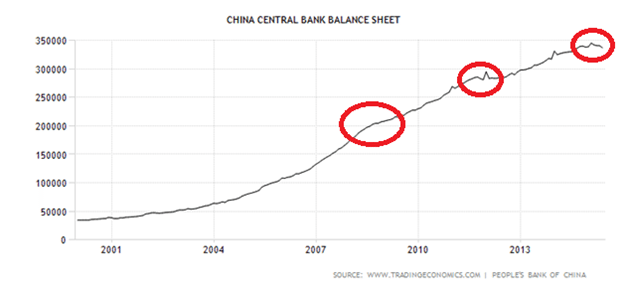
In yet another sign that stocks are fragile, the S&P 500 (NYSEARCA:SPY) has lost nearly all the gains made yesterday on essentially no news. The big surprise today was China’s devaluation of the Yuan by 1.9% in what markets believe is an attempt to boost exports after abysmal data came out yesterday.

China’s move may actually be a prelude to being accepted into the IMF’s basket of currencies in what is termed Special Drawing Rights, or SDR. This would mark the Yuan as a reserve currency and place it in direct competition with the US Dollar and other major currencies. The reason that the People’s Bank of China (PBOC) may have made its move is to make the Yuan a more freely moving currency rather than maintaining a narrow peg. This is a prerequisite of the IMF for SDR status that China is known to want.

China’s ADR stocks, collected in the iShares China 25 Index ETF (NYSEARCA:FXI) are also down today, apparently not so pleased with the PBOC’s move.

With the S&P nearing technical support at 2040 and the narrow range since February continuing, chances of a waterfall decline have increased today.

Meanwhile, the Volatility Index (^VIX), the measure of fear on Wall Street, has spiked 15%, though is still quite low around 14, skirting its 52 week low of 10.9. For some perspective, the “Fear Index” shot up past 80 in 2008, and past 40 during the 2011 flash crash.

Gold (NYSEARCA:GLD) has responded well to the sudden spike in volatility, trading up for a fourth straight day along with other precious metals, suggesting traders are moving to safety as stocks continue to coil. The move to safety was confirmed by the spike in bond prices and corresponding fall in yields, with the 10-year yield down 4.5% today.

Each day will now become more important in determining if a larger correction is in order as the S&P approaches the 2040 level, which is likely the backstop to a wave of stop loss orders.


Story continues below

AstraZeneca Drops Another $700 Million In Bid To Lead Oncology

Astrazeneca

Those of you that have been following Market Exclusive coverage over the last week or so will be fully aware that the predominance of our concerns have involved partnerships – and in particular – partnerships across the immuno oncology space. One company has stood out among the others as being particularly active, and that company has just announced a deal that will see it take yet another step into the space, and cement its position as one of the leading contenders going forward. On August 10, 2015, AstraZeneca PLC (NYSE:AZN) reported it had entered into a collaboration license agreement with Inovio Pharmaceuticals, Inc. (NASDAQ:INO) that will see the two team up on a range of cancer vaccine candidates – with a primary focus on the latter’s clinical-stage INO-3112 HPV cancer vaccine. Last week, across two immuno oncology deals, AstraZeneca (through its research and development arm MedImmune) earmarked just shy of $1 billion for allocation to the space over the next five years. The latest deal – which involves a 27.5 million up from payment and development and commercial milestone payments that could total up to $700 million – brings this figure to around $1.6 billion. So, with this said, what does the latest deal involve, and what might it mean for Inovio’s pipeline?

First, let’s look at some of the terms. As we mentioned, MedImmune will pay Inovio a $27.5 million upfront payment in return for access to the company’s lead candidate, INO-3112. MedImmune intends to put this treatment three trials in combination with certain (but as yet unstated) immunotherapy molecules from its own pipeline in HPV driven cancers.

So from a scientific perspective, what is involved? Well, it starts with one of Inovio’s pipeline treatments called VGX-3100. This treatment is a DNA immunotherapy candidate that targets cancers caused by the aforementioned human papillomavirus (HPV). There are two oncogenes of HPV called E6 and E7 (an oncogene is the scientific name for a gene that has the potential to mutate and cause cancer – in this instance in HPV cells). Upon administration, VGX-3100 elicits an immune response against these oncogenes, and theoretically as a result, can be used to treat cancers caused by HPV including cervical cancer. In July last year, the company announced positive phase 2 results for the treatment in a randomized cervical dysplasia trial. Phase 3 is expected to initiate during 2016. However, this is not the treatment AstraZeneca is focusing on. Instead, Astrazeneca is focusing on INO-3112, which is simply a combination VGX-3100 and interleukin-12 (IL-12), with the latter being a naturally produced interleukin (a scientific way for groups of molecules and signal proteins). IL-12 has a number of functions; one of the primary of these is the “differentiation” of naive T cells into Th1 cells. Simply, what this means is IL-12 turns dormant immune system cells into attacker cells. So, the theory is, by combining the two types of treatment, we will see an improved overall rate of efficacy in patients. So far, we’ve got preliminary data that look promising in a very small sample size, and a phase 2 study sponsored by the European Organization for Research and Treatment of Cancer (EORTC) expected to begin next year.

From an AstraZeneca perspective, the elements of its immuno oncology portfolio with which we will see INO-3112 combined and tested is not yet apparent, though the company has a very broad portfolio of potential candidates that – if they fall in line with the INO-3112 trial results – could benefit from enhancement by the IL-12 addition.

So what’s the takeaway here? Well, the biotech space has been in a bull market for the last five years, and a number of analysts are suggesting we are heading towards a bursting bubble and a downturn near-term. However, with companies such as AstraZeneca committing $1.5 billion plus across a matter of days to certain sectors of the industry, it looks as though the incumbent entities in the space disagree with these analysts. We can take two things away from this. Either that there is further upside potential in the biotech space, and a medium-term holding can benefit from this potential. Or, that the inelasticity of the pharmaceutical sector could favour mega-caps, and that even if we do get a wider market downturn, the risk-off assets in biotech such as AstraZeneca, Celgene Corporation (NASDAQ:CELG) and Gilead Sciences Inc. (NASDAQ:GILD) may offer a risk-mitigated exposure in an uncertain macro environment.

More from Market Exclusive:

  1. What Is the Real Cost of AstraZeneca’s Eye Cancer Flop?
  2. Frost Closes SciVac Deal, A Potential Blockbuster Lineup in Hepatitis?
  3. AstraZeneca Might Just Have Tapped Into 90% of a $13BB Market

Story continues below

Sanofi Has Just Become a $14B Stem Cell Play

Sanofi

Last week we covered a number of market moving deals in the biotech space. At the top of the list were two major deals by AstraZeneca PLC (NYSE:AZN) in the immuno-oncology arena, both of which reached triple digit millions of dollars. Now as we head into a fresh week in the biotech arena, another partnership announcement has hit press – this time involving fellow bio incumbent Sanofi (NYSE:SNY). The latter announced on August 7, 2015, that it had entered into an agreement with Germany-based Evotec, with the goal of developing a beta cell replacement therapy using stem cells to treat diabetes. The arrangement is the latest in what is has proven a controversial area of biotech over the past decade or so, stem cell research. However, if successful, it could give both companies exposure to a condition that currently affects just short of 400 million patients worldwide, and is – despite this enormous prevalence – as yet to receive anything close to a one-time treatment. So, with this said, let’s take a quick look at the deal, what the science involves, and what it could mean for both companies.

First, a look at the terms of the deal. From the looks of things, this is very much a 50-50 situation. Often we see mega cap bios provide the capital resources in a collaboration such as this, but – while there are funds earmarked – risk looks to be shared pretty equally. Sanofi will offer a €3 million upfront payment, and put aside a further €300 million marked for development and trials etc. Capital aside, however, both companies are contributing large amounts of human resource and Evotec looks set to put forward the lion’s share of the expertise in the stem cell arena.

What does the science look like? As we have mentioned, the companies are going after type I diabetes. People with type I diabetes don’t produce enough insulin. This means that – once the blood sugar (glucose) rises – the body is unable to use the glucose effectively. The things that produce insulin in the body are called beta cells, and they are found in what’s called a pancreatic islet – a small bunch of cells found in the pancreas. The traditional way to treat type I diabetes (regular insulin shots aside) is a pancreatic transplant. This basically means taking a transplant from a deceased donor and introducing it to a new host. Obviously, this is very risky, not only because it involves serious surgery, but also there is no guarantee that new host body will take up the pancreas. Further, there is no guarantee that the pancreatic islets in the new pancreas will produce insulin effectively. What Sanofi intends to do, is to take pancreatic islets from stem cells and introduce these into diabetes sufferers pancreas. Less than 92% of the pancreas is related to the production of insulin, and so the benefit to the avoidance of transplanting a full pancreas is obvious. If it works, the collaboration between the two companies could present a much safer, simpler and more effective method of treating type I diabetes. For those interested, there is a great background on this sort of treatment (which incidentally has been around since the 70s but as yet not been taken full advantage of) here.

So what is the market potential for the treatment, if the two companies can demonstrate efficacy in trial? The current market size for type I diabetes (indication for this treatment) is around $6.6 billion. However, market data suggests that via a compound annual growth rate of 7.6%, we could be looking at a market of around $14 billion by 2023. As a quick side note, Sanofi saw its type I diabetes treatment Toujeo approved earlier this year, within just one month of the patent on its top-selling Lantus insulin product expiring. The latter contributes around 20% of Sanofi revenues, and so the Toujeo approval came at a good time for Sanofi shareholders. Additionally, the move into stem cell diabetes treatment research suggests that rather than looking for an upgraded alternative to Toujeo (which is essentially just insulation administered via an epi-pen), Sanofi expects to move into a different class of diabetes treatment when the aforementioned hits expiry (February 2027).

More from Market Exclusive:

  1. What Is the Real Cost of AstraZeneca’s Eye Cancer Flop?
  2. Frost Closes SciVac Deal, A Potential Blockbuster Lineup in Hepatitis?
  3. AstraZeneca Might Just Have Tapped Into 90% of a $13BB Market

Story continues below

AstraZeneca Might Just Have Tapped Into 90% of a $13BB Market

Astrazeneca

There has been no shortage of oncology related developments in the biotech space over the last six months, as a number of the incumbent pharmas have looked to shift into what could turn out to be the next blockbuster arena. We have seen complete turnarounds in strategy, IPOs targeted at funding cancer immunotherapy trials and headline acquisitions already this year, and on August 6, 2015, we got yet another of the latter. On this day, AstraZeneca PLC (NYSE:AZN) announced a fresh partnership with Heptares, the developmental biotech unit of Sosei Group Corporation (SOLTF), that will see it gain exclusive global rights to HTL-1071, a novel adenosine A2A receptor antagonist targeted at immuno oncology. The announcement comes just a couple of days after AstraZeneca announced it was expanding its partnership with Isis Pharmaceuticals, Inc. (NASDAQ:ISIS), and – while the company’s stock gained on the second of these announcements, we are down premarket on Friday. So, with this said, what’s involved in the deal, and what might the treatment mean for all parties involved if it gets to market? Let’s take a look.

So first, let’s have a look at the deal. From what we can see, the deal is two-pronged. The first side will see the two companies in-license a drug designed to increase the efficacy of an investigational anti-PDL1 immune checkpoint inhibitor, durvalumab (MEDI4736), currently being developed by MedImmune, AstraZeneca’s global biologics research and development arm. For those not familiar with the term, in-licensing basically means the pooling of resources between two companies (more often than not pharmaceutical companies) in order to take advantage of each other’s expertise and/or capital. In this instance, it looks as though AstraZeneca is set to provide capital resources and Heptares knowledge and expertise. On the other side of the deal, and as we mentioned in the introduction, AstraZeneca will receive exclusive global rights to HTL-1071. From a financial perspective, AstraZeneca will pay an upfront $10 million, with a further $500 million earmarked for development and commercialization milestones.

So what’s this treatment all about? Well, over the last few years, we’ve seen a number of university studies suggest that the expression rate of adenosine correlates with tumor proliferation (growth). More specifically, the higher level of the former found in a patient, the higher the level of proliferation. This has led to a number of investigations into the correlation, and has borne the hypothesis that tumors use adenosine to interfere with an immune system response, effectively blocking T cells from attacking cancerous cells. HTL-1071 is all about blocking the A2A receptor of adenosine, to inhibit tumor’s ability to use adenosine (as the antagonist slows down its production) in this immune system interference.

So what’s the potential for this treatment if it does hit markets? Well, the cancer immunotherapy market is forecast to see 29% annual growth over the next eight years, and be worth 13.3 billion annually in revenues during 2023 (globally). Checkpoint inhibitors (of which the aforementioned MEDI4736 is one) will account for between 85% and 91% of the immunotherapy market by 2023, with the figure varying depending on which analysis you consider. Adenosine A2A receptor antagonists such as HTL-1071 can theoretically work with any type of checkpoint inhibitor, and so the natural conclusion is that this therapeutic type could be used in more than 85% of a $13 billion market by 2023.

So what’s the takeaway here? Well, Astrazeneca has on a couple of occasions been regarded as a late, to the immuno oncology space – based on a number of popular news media reports. However, while this may be the case, it now looks as if the company is willing to go full force into the field, and is doing so not just from a general treatment perspective but also from a combination therapy perspective – something that effectively doubles the potential market revenue over the next ten years. This is definitely one to keep an eye out for as things progress, with interim trial data scheduled before the end of this year a likely near-term volatility driver in the stock of both Astrazeneca and Sosei.

More from Market Exclusive:

  1. What Is the Real Cost of AstraZeneca’s Eye Cancer Flop?
  2. Frost Closes SciVac Deal, A Potential Blockbuster Lineup in Hepatitis?
  3. Ebola Silver Bullet a Social Not Financial Win for Merck
Story continues below

Zynerba Stumbles Out Of the Block when Compared with 2014 IPO Data

Zynerba Pharmaceuticals

Over the past 24 months, two sectors of the investment landscape have been more active than pretty much any others. The first, the marijuana space. A number of states in the US have now legalized recreational marijuana, and many more are scheduled to do so over the coming five years. This legalization led to a skyrocketing of certain marijuana associated companies (and some with no association at all as it!) during the latter half of 2013, and an ensuing crash during the majority of 2014. The second, biotech. Biotech ETFs are up nearly 500% on the last half decade, and despite many analysts calling the rise a bubble, both incumbent entities in the space and new and developing companies seem to be gaining market capitalization as we head into the latter half of 2015. As a result of the gains in the latter of these two sectors, IPO announcements have been rife. We have seen the biggest biotech IPO ever with Axovant Sciences Ltd. (NYSE:AXON) $315 million raise based on its dementia treatments. We’ve had oncology biotech Aduro BioTech, Inc. (NASDAQ: ADRO) double in price from an IPO of $17 a share to close on a 147% gain at $42 before session end. Now we’ve got another IPO that looks nicely positioned as a marijuana industry candidate in the biotech space to draw benefit from the high levels activity in both. That company is Zynerba Pharmaceuticals (NASDAQ:ZYNE).

On August 4, 2015, the company announced the pricing of its IPO of 3 million shares of common stock at an offer price of $14 a share. On top of this, the company announced that it had granted the underwriters an option to purchase 450,000 further shares of common stock at this $14 a share offering price minus the underwriting discount. The IPO hit markets at New York open on August 5, and holding $42 million at its mid-range target price. This looks a reasonable introduction, and should go some way to funding the company’s activity throughout the latter half of this year, but when compared with average IPO numbers last year, looks a little lackluster. 76% of the biotechs that hit markets in 2014 raised more than $50 million, with a further 27% clearing $100 million. Comparatively then, Zynerba is already behind on last year’s figures. However, this does not mean it is not a candidate for gains before the end of 2015. As we have said, the company is positioned in a couple of hot sectors, and these could come together to boost its market appeal. In order to try and gain some insight into its potential, let’s have a quick look at the science behind its lead candidates.

As mentioned, the company waiting cannabinoids and specifically, cannabinoid patches.  Both of its current lead pipeline candidates are in preclinical stage, with the first, ZYN001, a prodrug of THC targeted at patients with fibromyalgia and peripheral neuropathic pain, and the second, ZYN002, a synthetic CBD, targeted at patients with refractory epilepsy, Fragile X syndrome and osteoarthritis. Both are prodrugs – meaning that they are delivered through the epidermis via during which the process converts the prodrug to a different form through a normal metabolic process. The best way to think about this is (using the example of the patch in this instance) the patch being the prodrug, and the final delivery being just a drug, with the “pro” element of it being the patch gel that is absorbed in the epidermis.

ZYN001 uses THC to target can upload receptors in the brain, which are involved in a range of psychological and physiological processes including pain sensation, mood and nervous system action. ZYN002 is the same, with a similar mechanism of action, but uses synthetic CBD, a manufactured cannabinoid rather than THC. So where is this company’s advantage over the more “traditional” marijuana biotech? Well, through the prodrug administration, Zynerba’s candidates can (or so is hypothesized) deliver cannabinoids much more efficiently. The reason for this is that they avoid a “first pass” liver metabolism – something that oral and oral mucosal delivery methods do not.

So what should we be looking at from a timeframe perspective? Well, the company expects to initiate a phase I for ZYN001 mid-2016, and a phase IIa trial during the first half of 2017. Things will happen a little sooner with ZYN002, with the company expecting a phase I trial initiated during the second half of this year, and a phase IIa the same time next year. The recent capital raise should fund the first three of these trials (i.e. the ZYN002 phase I, IIa and the ZYN001 phase I). So these are the primary drivers we will be looking for to boost capitalization short to medium term.

The takeaway? That this is a timely IPO for a company that looks well-positioned to take advantage of two currently hot sectors. However, it has stumbled somewhat out of the blocks, and we would like to see further capital injection before the completion of the first three trials of its two pipeline candidates so as to ensure we avoid potential dilution of any early allocation.

Related Posts:

  1. Phase III Success Makes this Company a Potential Blockbuster Biotech
  2. Frost Closes SciVac Deal, A Potential Blockbuster Lineup in Hepatitis?
  3. Ebola Silver Bullet a Social Not Financial Win for Merck

Story continues below