Home Blog Page 14601

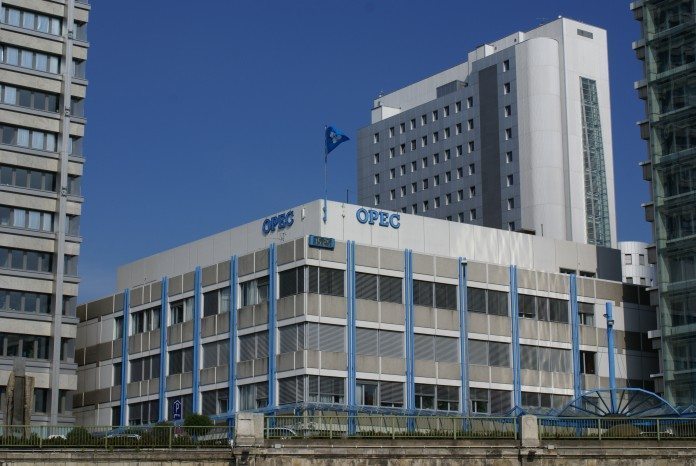
Oil Prices Trade Around $31 as No Word on Output Cut

SONY DSC

The faintest hint from oil producing nations on possibly curbing oil output had world markets cheering yesterday. However, the optimism was short-lived as the fundamental picture of oversupply remains unchanged.

Click Here For More Market Exclusive Updates & Analysis

Markets were abuzz with speculation after reports indicated that Saudi Arabia and Russia have expressed theoretical interest in cutting supplies. Russia’s second largest oil company stressed the urgent need to cut production while OPEC’s call for cooperation from other oil exporting nations also beefed up hopes of a longer term resolution to the oil glut.

There is as of yet no confirmation that oil exporting nations will strike a deal though, giving no real direction to the markets. Kuwait has stated that any output cut is unlikely until and unless all oil producing nations work in tandem.

On the back of these developments, oil is witnessing steep price swings, touching a high of $32 per barrel yesterday. Today, Brent crude was trading near $31.14 while U.S. Oil futures for March delivery slipped 3.28% to $30.40.

U.S. oil companies cut spending

Amidst the oil weakness, three of the largest U.S. shale oil companies, Hess Corp (NYSE:HES), Continental Resources, Inc (NYSE:CLR) and Noble Energy, Inc (NYSE:NBL) have significantly trimmed their 2016 capital spending budget, with cuts ranging between 40% to 66%. One has even stated that profits could come only when oil rebounds by more than 20%. This has led analysts to project a spending cut of 38% by the sector as a whole for 2016.

The U.S. government estimated that domestic crude production will decline by nearly 700,000 barrels per day by the end of 2016 to 8.5 million barrels per day.

Story continues below

No Business As Usual For Microsoft’s (NASDAQ:MSFT) Research Arm

Microsoft Corporation (NASDAQ:MSFT) is overhauling its research arm with the goal of quicker technological development and delivering products quickly to customers before competitors can replicate them. Microsoft research teams have often been criticized for not bringing their products to life and this is what Satya Nadella, Microsoft’s CEO, is looking to change.

Click Here For More Market Exclusive Updates & Analysis

Nadella has had some critical successes on that score already. During Nadella’s first month as CEO back in February 2014, he became interested in a project that used artificial intelligence and speech recognition to translate a live conversation to another language. Nadella told the research team in charge that he needed this tool combined with Skype and that it should be ready in three months’ time.

The company’s research group was set in isolation from the product team, and the Skype translator was designed within the set period.

In order to integrate its research wing with the rest of the company, Microsoft moved more than half of its research staff to a new group called MSR NExT. This group was to focus on high impact projects rather than pure research. The move was made back in September 2014.

Recent Microsoft innovations have not only helped Skype but have been useful for a variety of products. These include Cloud productivity tools in Office, faster servers running Bing and the development of HoloLens, the world’s first holographic computer.

Microsoft’s latest innovation is a new feature for Cortana. Microsoft is planning to release an update of the digital assistant. This will give Cortana the ability to scan e-mails for various tasks users have set themselves to accomplish.

The overhaul comes at a time when Microsoft is in a race with both Alphabet Inc. (NASDAQ:GOOGL) and Facebook Inc. (NASDAQ:FB) to develop technologies relevant to people’s lives, not exactly a simple task even in the tech age where new technologies are developed seemingly every day.

Story continues below

Barclays (NYSE:BCS) Confirms Support For Apple Pay

Barclays PLC (ADR) (NYSE:BCS) has announced that it will be teaming up with Apple Inc. (NASDAQ:AAPL) in support of the latter’s payment service, Apple Pay.

Click Here For More Market Exclusive Updates & Analysis

The decision by the bank is good news for Apple because it will allow the payment service to have a deeper footing in the UK. The service was launched in Britain in July 2015, but its adoption has been relatively small, and progress has been slow. The bank had previously been indecisive about linking its cards with Apple Pay.

Barclays Bank CEO, Ashok Vaswani, made the announcement that finally made the bank’s stance clear on the matter. He announced that the bank will officially launch its support services with Apple by April. Mr. Vaswani revealed through email that the bank will launch support services for Apple Pay in the next 60 to 75 days if things go as planned. Barclays will, therefore, begin to offer card support any time from mid-March to early April.

Barclays’ delay in initiating its services has been rather disappointing to Apple Pay and Barclays customers. The bank now hopes the launch date will not be too late to warrant the migration of customers to other banks. Barclays is yet to reveal the reason for the delay in adoption of Apple Pay, but the bank has been working on its own payment services.

One such service is bPay, launched in 2015. It also launched a near-field communication (NFC) payment service available to Barclays cardholders, not forgetting its joint operations with mobile payment firm, Zapp.

Barclays was the only bank among the four major British banks that was yet to support the NFC payment service. Now that it is, Apple Pay should benefit from an increased customer base.

The bank’s involvement will also encourage customers to trust the new service. One of the major hurdles faced by Apple Pay at the beginning of its launch was a slow adoption rate because it was a new service in the market and people did not trust it. However as banks offered support, the process of adoption by customers became much easier.

Story continues below

Global Markets Mixed, Eyes On The U.S.

Better-than-expected earnings reported by some of the major U.S. companies along with improved sentiment kept Asian markets relatively calm today. The only exception was China’s Shanghai Composite Index, which reversed from steep losses of 4% to finish the day only slightly lower.

Click Here For More Market Exclusive Updates & Analysis

Shanghai extends losses

The Shanghai Composite Index fell 0.52% or 14.23 to 2,735.56. Today marks the second consecutive day of losses for the index as concerns of capital outflows from the region are firming up. According to analysts and market participants, Beijing is now focusing on the yuan’s stability rather than driving up stock markets.

In the rest of Asia, Hong Kong’s Hang Seng rose 1.02% or 191.65 to 19,052.45. Japan’s Nikkei 25 closed 2.72% higher to to 17.163.92. Up ahead in the week, investors will be paying attention to the monetary easing stance of the Bank of Japan, which kept rates unchanged at its last meeting.

Europe trading lower

In Europe, major indices were trading mildly lower during the late Asian hours. Oil prices seem to be dictating the movement of European markets as U.S. Oil Futures are back in $30 per barrel range. Crude Brent has also shed gains and is trading around the $31 level. Both the FTSE 100 and DAX are down by 0.39% and Euronext 100 was trading 0.27% lower at 856.58 today.

After a mixed reaction coming from Asian and European markets, it remains to be seen how U.S. markets will open today, considering extreme volatility this week so far. A rally in oil prices and strong corporate earnings kept the momentum up in U.S. markets yesterday. The Dow Jones Industrial Average inched closed 1.8% higher at 16.167.23 while S&P 500 Index too surged 1.41% to 1,903.63.

Apple Inc. (NASDAQ:AAPL) dominated the headlines after reporting $18.4 billion in profits but witnessed sluggish iPhone sales growth.

Story continues below

Alphabet (NASDAQ:GOOGL) Pulls Google Glass From Social Media

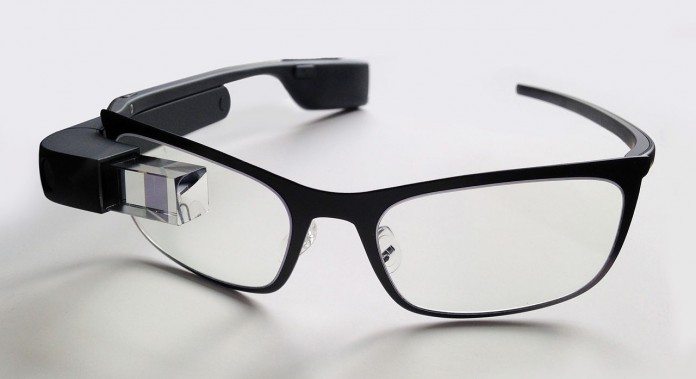
Alphabet Inc (NASDAQ:GOOGL) has shut down several of its social media accounts linked with its Google Glass. Alphabet’s aim was to popularize the eyeglasses to customers by use of Twitter, Facebook, Google+ and Instagram. On Google+ there was a message stating that they had fun hanging with explorers and users can get in touch or submit questions concerning Google Glass on the support page.

Click Here For More Market Exclusive Updates & Analysis

Google Glass, unveiled about four years ago, has not gained as much success as Alphabet hoped for. The move is a sign that Google is trying to move on from the failed Google Glass consumer launch.

Most industry observers have noted that Google Glass was most suited for business and enterprise rather than the consumer space. Reports in September claimed that the company had hired new engineers to work on a new project named ‘Project Aura’ aimed to transforming Google Glass for businesses and organizations.

The new design of the high tech glasses could be useful in factories, warehouses, and hospitals among other places of business.

The closure of Google Glass Social Media pages is a clear sign of the end of the consumer version, for now. The head of Google X research lab had since stated that initial hype over the glasses had been overblown since there was only a prototype at the time rather than the finished product. This seemed to imply that the final product was enterprise-oriented than for individual use.

When Google Glass was first introduced, people greeted it with much excitement. It presented the ability to access email by use of its eyelevel screen and to record videos using a tiny camera. Over time, it ran into problems, and people mocked it due to its shortcomings.

Story continues below

Here’s What to Look out for in Regulus’ Upcoming Interim Release

Just as has many of its biotech peers, Regulus Therapeutics Inc. (NASDAQ:RGLS) has had a tough start to the year. The company started 2016 with a market capitalization of a little over $420 million. At yesterday’s close, the market valued it at $323 million – a 30% decline across the period. In February, however, Regulus will report data from a phase II study of its lead candidate, RG-101, which the company is currently trialing in a hepatitis C indication.

Click Here For More Market Exclusive Updates & Analysis

Promising results would likely inject some upside momentum into Regulus, and could quickly close the gap on it’s 2016-open cap. Ahead of the release, here’s a look at how the drug works and what we should be looking for in the data.

First, a quick primer on Hepatitis C. It’s caused by the HCV virus, and unlike it’s A and B counterparts, there is no available vaccine. The condition generally doesn’t show any symptoms for a number of years, while it quietly attacks the liver – it’s the number one cause of liver transplants in the US. There are a few available treatments, none of which are 100% effective. Lead symptoms include cirrhosis, liver failure and liver cancer.

RG-101 is what’s called GalNAc-conjugated anti-miR that targets miR-122. Sounds pretty complicated, but its just jargon. GalNAc-conjugation simply refers to the delivery method of the drug – in this case it’s a formulation intended for injection under the skin. miR refers to microRNA (not to be confused with mRNA). Think of it like this: mRNA is a long strand that expresses a particular pattern of genes. Normally, a ribosome will pass along the strand, producing and secreting proteins as it goes. microRNA acts a regulator of this process – it binds to a particular region of the mRNA strand (after first binding with a protein, but we don’t need to go into this bit) and blocks the ribosome from its continued path along the mRNA strand. This either stops it from producing any more of the protein that that particular strand codes for, or holds the ribosome in a position that means it continues producing a particular protein (which one depends on the position of the microRNA). mir-122 is a microRNA that stimulates HCV replication by binding to RNA expressed by the HCV virus. RG-101 attaches to mir-122, stopping it from attaching to HCV RNA, and in turn, (theoretically, at least) can be used to halt HCV replication.

If there are already treatments available, why is Regulus spending money developing this one? Well, the current SOC is a combination of an antiviral drug called Pegasys and ribavirin. This combination is generic and – in turn – cheap, but it is frequently innefective (for unknown reasons) and is notorious for its long list of adverse side effects. We won’t list them in this piece as it wont make for very entertaining reading, but those interested can see a full list here. If Regulus can bring a treatment to market that is effective and safe, it could quickly dominate the hepatitis C space, at least in developed nations that can afford the drug, and therein lies the company’s incentive.

Which brings us nicely to what we want to see from a data perspective. There will be two numbers that stand out in the data – the first, a mean viral load reduction (MVLR) figure and the second, a below the limit of quantification (BLOQ) number. Regulus hasn’t told us exactly how many patients it has enrolled on the trial, and with this being an interim analysis there is every chance that the total number will change between now and topline anyway, but with the MVLR figure we are looking for a reduction in at least 85-95% of patients. If the company produces this or higher, it should be considered positive. BLOQ we want as high as possible. In the phase I for this indication, 65% of (9 out of 14) patients had a viral load BLOQ, which essentially means the virus has gone (almost) completely. If we get a replication of this 65%, or higher, ideally, then again it should be looked at as positive.

As a side note, these numbers rely heavily on safety and tolerability data also being positive. Regulus is targeting a market dogged by adverse events, and so a safe candidate could be justification for an FDA green light even if efficacy is sub-par.

Data is due mid-Feb, so keep an eye on the company’s press release section here for the update. Beyond that, topline should come in about twelve weeks time.

Story continues below

Advanced Micro (NASDAQ:AMD) Opens Up PC Graphics Chips Development with Launch Of GPUOpen

Advanced Micro Devices, Inc. (NASDAQ:AMD) has launched a new website aimed at promoting GPUOpen, an open-sourced graphics processing unit. The launch of the site means that AMD believes coders can give them a hand in boosting their graphics performance. This new site is intended to assist graphics developers with open source codes, documentation kept outside the gaming console, effects, and tools. If the project is successful, we will see games with better graphics running on current hardware.

Click Here For More Market Exclusive Updates & Analysis

Advanced Micro has promised to accommodate more platforms as GPUOpen meets its potential. According to some, though the move might seem purely generous, AMD is actually trying to compete with NVIDIA Corporation (NASDAQ:NVDA) and Intel Corporation (NASDAQ:INTC). NVIDIA rules the dedicated video market while Intel gives it a lead in integrated graphics. In a sense, this move by Advanced Micro is an attempt to make their graphics chip more attractive to developers, giving them a better chance in this competitive market.

GPUOpen is divided into two categories, one for professional compute and another for CGI and games. The CGI and gaming side of the site will include Geometry FX, AO-FX, Tress FX and Shadow FX. These are libraries that are DirectX based open source assets to be used by developers. Liquid VR has also been included in the library.

Professional compute will include HIP (heterogeneous computer interface for probability) which is a new comparatively new tool that converts CUDA code to Common C++. There is also GCN 3 ISA, which has extensive documentation making it easier for developers.

Story continues below

Wal-Mart (NYSE:WMT) To Venture Deeper Into Cloud Technology to Rival Amazon (NASDAQ:AMZN)

PLUM3G

Wal-Mart Stores, Inc. (NYSE:WMT) is seeking to break the dominance that Amazon.com, Inc. (NASDAQ:AMZN) has over the cloud computing business.

Click Here For More Market Exclusive Updates & Analysis

Wal-Mart has open sourced its cloud management tool called OneOps to allow the creation and migration of applications across different computing infrastructures such as Azure from Microsoft Corporation (NASDAQ:MSFT), Rackspace and Amazon.

Wal-Mart’s venture with OneOps will therefore not be directly competing against its Amazonian rival but rather enhancing portability across different platforms. Amazon hosts numerous firms on its cloud infrastructure. These companies depend entirely on Amazon’s infrastructure since there is no portability to other platforms. It is also one of the reasons why technology infrastructure has been Amazon’s main sources of revenue.

Wal-Mart’s new venture not only aims to improve the situation for these companies but also to enhance the ease of data use. This is because its software will allow companies to access Amazon’s cloud business while at the same time using their own data centers. In this way they will not be confined to Amazon data services. This is good news for enterprises and developers because it will provide advantages such as scalability, technology, and better pricing.

Developers will be able to program applications that can easily interact with different clouds thanks to OneOps. Additionally, Wal-Mart is launching OneOps as an open source software because it is not a cloud provider but rather a cloud user. Releasing it will allow the cloud industry to create new ways that will enable it to blend in with existing technology.

According to Wal-Mart Labs CTO Jeremy King, the primary drive behind the company purchasing OneOps in 2013 was to overcome the limitations of the current system where firms are locked in Amazon’s cloud service. Wal-Mart believes that the open source OneOps will allow the creation of more tools and functionalities that will be essential for the support of future technologies. This may also attract more companies that depend on cloud technology while at the same time making it easier for them to adopt the technology in the first place.

Story continues below

Dollar Largely Unchanged Ahead Of Fed Policy Statement

The euro is trading slightly lower against the U.S. dollar as the market participants are eagerly awaiting the Federal Reserve’s comments later today. The Conference Board released U.S. consumer confidence data yesterday, which saw an small uptick month-over-month.

Click Here For More Market Exclusive Updates & Analysis

Consumer confidence rises

As per the report, the consumer confidence index ticked up to 98.1 in January from 96.3 in December. The readings surpassed analysts’ expectations by a wide margin. The consensus estimate was a reading of 96.5 for January. Meanwhile, investors are looking forward to the Fed policy statement to gauge the direction of future rate hikes amidst global stock market volatility.

In Europe, investors are eyeing employment data in Italy and France alongside monthly inflation numbers to be released in Germany towards the end of the week. EUR/USD was lower by 0.11% to 1.0859 during late Asian hours.

The New Zealand Dollar continues to remain under pressure against its American counterpart. The NZD/USD pair was down by 0.09% to 0.6493 ahead of the policy statement to be published by the Reserve Bank of New Zealand. Investors are expecting the bank to keep rates steady for the time being. The pair’s support and resistance levels are at 0.6423 and 0.6554 respectively.

Australia sees inflation picking up

On the other hand, the Australian dollar has touched two-week highs against the greenback on the back of positive inflation data in the region. AUD/USD breached the two-week high of 0.7051 before consolidating to 0.7027, or 0.31% up versus the U.S. dollar.

The Australian Bureau of Statistics posted a 0.4% increase in the consumer price index during the fourth quarter, higher than the forecast of 0.3% uptick. On a yearly basis, consumer prices rose 1.7% in the fourth quarter, above estimates of 1.6%.

The British pound was lower against the Dollar as GBP/USD traded down by 0.24% to 1.4316. The U.S. dollar index traded flat at 99.08 on Wednesday, implying caution among market participants over the Fed policy stance.

Story continues below

Cortana Update By Microsoft (NASDAQ:MSFT) To Make Emails, Calendars Proactive

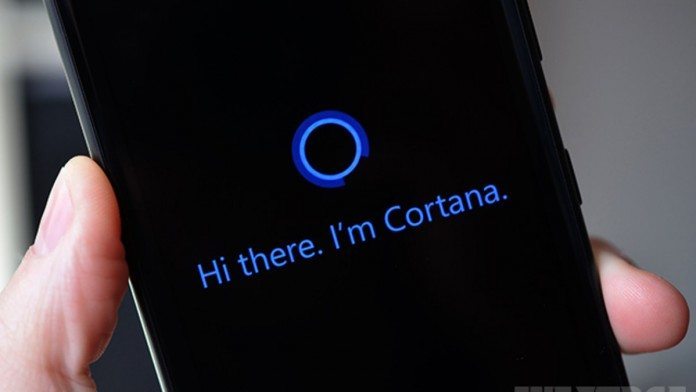
Microsoft Corporation (NASDAQ:MSFT) is working on making PC usage more personalized and smarter, with the latest update to its Cortana feature. According to company officials, the update will make emails, reminders and calendars more proactive. The new updates are expected to be available with Windows 10 in the U.S. and U.K. initially and help users manage their time more effectively.

Click Here For More Market Exclusive Updates & Analysis

For emails, Cortana will review and advise setting reminders in accordance with users’ email sending habits. The new technique will enable the feature to suggest the setting of reminders for tasks that require action. For instance if a user sets a task to be done at 5 pm, the feature will store the information and as the time for the task grows nearer, it will send a reminder.

Cortana aims to Enhance Productivity

According to Product Manager at Cortana Group Marcus Ash, the feature will be similar to the existing one that enables user to get alerts after clicking on the Cortana tab.

Ash stated that the update will help in increasing productivity by saving users from additional notifications. It can be accessed as easily as the windows search bar. The feature is a replacement for Microsoft Office’s Clippy feature that irritated users with excessive notifications.

Easy to Control

Cortana’s time management function can also be turned off by the user. According to Ash, the feature is meant to be an extension to what users already do, and is simply a better and more organized method of reading emails and viewing the calendar on the PC.

Once the feature meets the approval of the initial sphere of users, it is likely to be available to others but the company has not commented on an exact timeframe.

Story continues below