Home Blog Page 14600

World Markets Showing Mixed Reaction To Fed Statement

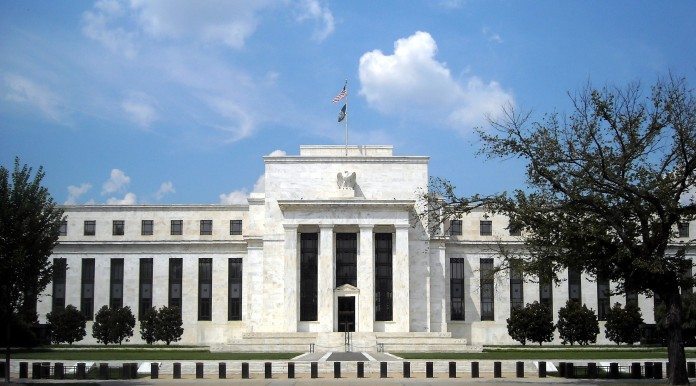
Asian markets ended the day mixed, reflecting indecision from the direction of the U.S. equities that tumbled yesterday. The main factor that drove world markets yesterday was the statement from the Fed, which signaled a slower pace of monetary tightening.

Click Here For More Market Exclusive Updates & Analysis

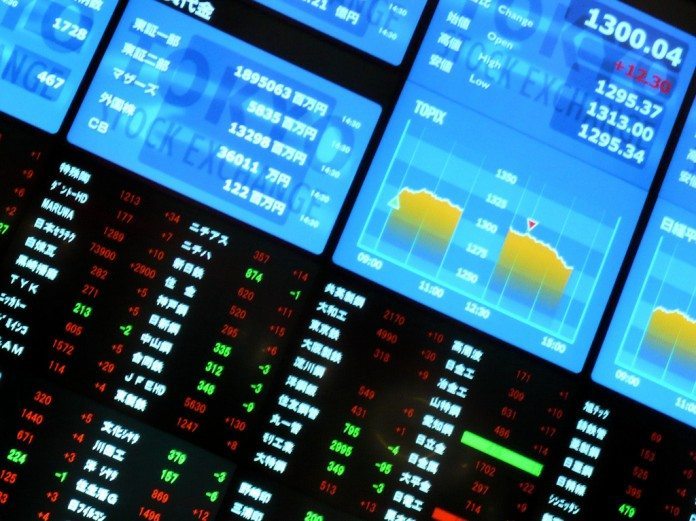
Despite a moderate view concerning economic growth in the U.S., major Asian indices retreated from their morning losses. Hong Kong’s Hang Seng closed 0.75% higher at 19,195.83 while Taiwan’s TSEC 50 Index gained 55.27 points, or 0.70% to settle at 7,905.10. China’s Shanghai SE Composite Index and Japan’s Nikkei 225 were exceptions as they lost 2.92% and 0.71% to end the day lower at 2,655.66 and 17,041.45 respectively.

Price action was similar in European markets, where indices traded mixed. The U.K. fourth quarter report will be a main driver of market sentiment today. According to the Office for National Statistics, the U.K. economy grew by 0.5% in the fourth-quarter versus 0.4% in the previous quarter, matching market expectations. These numbers should take off worries that Britain’s economy is in a steep slump as domestic demand remained supported.

Britain’s benchmark index FTSE 100 tested the 6,000 today but pared gains to trade 0.07% higher at 5,994.51. Euronext 100 is up by 0.35% to 866.76 while France’s CAC 40 is higher by 0.52% at 4,403.16. However, DAX is trading lower by 16.44 points at 9.864.38.

Meanwhile, US stock futures entered in positive territory today after recording a substantial decline yesterday. US markets seem to be ambivalent that the Fed has not deferred from its stance of gradual monetary tightening, at least not in word. Both Dow Jones Industrial Average and S&P 500 Index fell by 1.38% and 1.09% respectively at the close of the previous trading session, showing uneasiness over the Fed monetary stance.

Story continues below

Russia May Reach Out To OPEC In Bid To Contain Oil Mayhem

Renewed speculations that oil exporting nations may agree to a production cut has infused fresh life in oil prices. Brent Crude continues its positive momentum trading up by $0.50 to $33.60 per barrel, heading towards the $34 level. Meanwhile, U.S. crude futures for March delivery have recovered by 0.71% to $32.53 per barrel.

Click Here For More Market Exclusive Updates & Analysis

Russia prepares to address the oil glut

According to a report from Russia’s pipeline monopoly, Russian authorities have expressed interest in opening talks with OPEC members for curbing oil output so as to boost oil prices. The decision was arrived at a meeting held in Moscow, where all participants agreed that talks with OPEC members can help contain oil market turmoil. The move reflects Russia’s urgent tone as the country is on the edge of an economic slowdown.

Other OPEC members such as Venezuela, Algeria and Nigeria have also come forward with the recommendation of an oil output cut. These reports have instilled positivity not seen this year until now. Analysts are anticipating that the initiative from giant oil exporting nations is likely to reduce the downside risk for oil, which crashed to 12-year lows this month.

Balance to come in 2016?

Saudi Arabia’s deputy minister at the Ministry of Petroleum and Mineral Resources, Aabed A. Al-Saadoun has kept the global oil supply estimate at roughly around 2 million barrels per day. He added that the market will take some time to rebalance but sees demand for energy picking-up thereafter.

In its report published on Wednesday, the Energy Information Administration reported an increase in U.S. crude stockpiles of 8.4 million barrels per day. The data came higher than estimates of an increase of 3.3 million barrels per day. But, investors preferred to remain calm after noting a 771,000 barrels output decline at Cushing, Oklahoma.

Story continues below

Here’s A Look at Merck’s Latest Priority Review Candidate

Merck & Co., Inc.

We just learnt that the FDA has accepted Merck & Co. Inc.’s (NYSE:MRK) biologics license application (BLA) for it’s latest infectious disease candidate, and alongside the acceptance, has granted the drug priority review. Let’s have a look at what the drug is, how it works, and what it might mean for Merck and its shareholders going forward if the agency gives it the green light.

The drug in question is called bezlotoxumab. It’s an antitoxin, which is a type of treatment that indices passive immunity in humans, targeted at the prevention of recurrence of clostridium difficile (“CD”) infection. We’ll look at the science in a little more detail shortly, but since we don’t often get to talk about antitoxins (they’ve taken something of a back seat to oncology immunotherapy in the last few years), Merck’s announcement is a nice excuse for a quick digression. Specifically, a quick word about a horse called Jim. Antitoxins are produced in the blood of an organism (plant, animal) through the introduction of a toxin, the removal of the organism’s blood, and the the extraction of the antitoxin from the blood. Jim was a horse that in the late 19th century physicians used to produce nearly eight gallons of diphtheria antitoxin. At the start of the 20th century, however, some of this antitoxin was found to contain tetanus, and a group of children died as a result of taking the contaminated formula.

The failure to check for contamination led to the introduction of a bill called the Biologics Control Act, which in turn led to the formation of the Hygienic Laboratory – known today as the Center for Biologics Evaluation and Research – and shortly after, the FDA.

History lesson over, let’s get back to Merck. So we don’t know what animal the company is using to produce the antitoxin – chances are its not a horse – but we know how it works. It’s designed for administration alongside the current SOC for CD, which when administered, binds to the CD toxin and flags it up to the immune system. The immune system recognizes the flag and creates antibodies that can fight CD. These antibodies remain in our system, primed to attack the CD toxin if it returns.

So what are the implications of an approval for Merck? There are no drugs currently available that target the prevention of CD recurrence, so if Merck can get bezlotoxumab approved, and it becomes a standard co-administration with the current SOC antibiotics, it could be a real revenue generator for the company. The Center for Disease Control in the US ran a study last year that estimated there are a little over 453,000 people that receive treatment for CD infection each year, and 29,000 of these die. The price point is not yet clear, and the range for current existing toxins is pretty wide, making it difficult to forecast accurate revenues potential. The current generic antitoxin for tetanus, for example, costs around $0.60 per dose. At the other end of the scale, the antitoxin for anthrax poisoning comes in at a little over $5,000 per dose. Chances are Merck will be closer to the tetanus price than the anthrax price, but don’t expect it to be cheap. At a very conservative estimate of $150 a dose, the drug would generate a little over $110 million annually for the company if it becomes SOC as a co-administration.

What sort of timeframes are we looking at? As mentioned in the introduction to this piece, the FDA has granted bezlotoxumab priority review, which cuts the current standard ten-month review period to six months. As such, the agency has issued a Prescription Drug User Fee Act (PDUFA) date, which just means the date that it intends to report its decision, as July 23, 2016. Chances are we will get an advisory panel review ahead of PDUFA – the FDA often requests such when it comes to infectious diseases – so this could provide some insight into the drug’s chances ahead of the agency’s decision day.

There’s also the chance that, with the drug being priority review, the FDA will issue a decision earlier than stated. PDUFA is merely a guideline, so keep an eye out for any information concerning bezlotoxumab in the 1-1.5 months leading up to July 23.

Story continues below

Novavax (NASDAQ:NVAX) To Raise $300 Million in Debt

Novavax, Inc. (NASDAQ:NVAX) intends to raise more debt through the sale of convertible notes than it previously projected. The vaccine developer will now raise debt worth $300 million as opposed to the $200 million that management had earlier anticipated. The proceeds from the debt fundraiser will finance various clinical projects and add to working capital. JPMorgan & Chase Co. (NYSE:JPM) and Citigroup Inc (NYSE:C) are among the financial institutions helping Novavax with the fundraiser.

Click Here For More Market Exclusive Updates & Analysis

The $300 million that Novavax is raising is in the form of senior unsecured notes, which will convert into the company’s common stock when they mature. The notes are expected to mature on Feb. 1, 2023, but they will earn interest at the rate of 3.75%. Novavax said cash interest on the notes will be distributed to holders twice a year in February and August. The initial interest payment will be made on August 1, 2016.

Room to purchase more notes

Because of investor appetite for debt, Novavax has taken measures to make a reasonable amount of the notes available. As such, while the company is primarily selling $300 million worth of convertible notes, it has made a provision for the underwriters to purchase additional notes of up to $30 million to cover oversubscription.

Novavax is expecting $291 million in net proceeds from the debt offering, assuming that no additional notes are purchased. If the underwriters ask for more notes to cope with oversubscription, the company expects net proceeds of $320 million, before deducting expenses related to the offering but after accounting for commissions and discounts.

Putting the money to use

Novavax has identified a number of areas where it intends to spend the funds. The company plans to funnel some of the funds to finance various clinical programs, including the Phase 3 testing of RSV F Vaccine in seniors and expectant women. Some money will be channeled through capex and acquisitions among others.

Novavax has tapped Citigroup and JPM as managers and Guggenheim Securities and Piper Jaffray as co-lead managers in the notes offering.

Story continues below

Meritor (NYSE:MTOR) Unveils New Brake Shoe Protection, Better Clutches

In a move that aims to expand its product options, Meritor Inc (NYSE:MTOR) has introduced an advanced brake shoe protection and high-performance clutches. PlatinumShield III, the latest addition to Meritor’s line of brake shoe coating, can be used on new and refurbished Meritor brake shoes. The company has also expanded its line of clutch offerings with AllFit clutches, which cover a wide range of heavy duty applications.

Click Here For More Market Exclusive Updates & Analysis

PlatinumShield III coating

Meritor’s PlatinumShield III is designed for aftermarket customers and it is billed as a game-changer when it comes to protecting brake shoes. The enhancement made in PlatinumShield III ensures that it increases brake shore durability and also enables users to lower brake maintenance costs.

Meritor launched the PlatinumShield line of brake shoe coating in 2009 and the product has seen widespread adoption since that time. According to Meritor, PlatinumShield technology has been used to protect over 25 million brake shoes, both refurbished and new.

Meritor has been looking for a way to improve the performance of PlatinumShield coating. With PlatinumShield III, Meritor says that drivers can expect longer vehicle uptime and fleet operators can be more profitable, primarily because of savings due to lower maintenance expenses associated with PlatinumShield III.

AllFit clutches

As part of the expansion of its aftermarket offerings, Meritor has also launched what it calls Meritor AllFit clutches, which are available in both manual and automatic models. The company says its primary target with the AllFit clutches are warehouse distributors and original equipment customers.

According to Meritor’s Jason Kraus, senior manager in the aftermarket segment, customers have been asking for high-quality, all-makes clutches that they can buy at competitive prices, and Krause sees AllFit as fitting the bill.

The new clutches come with a full-year warranty and labor rebate of up to $800.

Story continues below

Fiat Chrysler (NYSE:FCAU) Sees Weakness in Asia

Fiat Chrysler Automobiles NV (NYSE:FCAU)

After the spin-off of Ferrari NV (NYSE:RACE), Fiat Chrysler Automobiles NV (NYSE:FCAU) has reported its quarterly numbers for the fourth quarter. The automaker saw weaknesses in Asia as well as Latin America, offset by enhanced numbers in Europe and strong sales out of North America. Though its bottom line dipped 40.2% in the fourth quarter, its adjusted net profit more than doubled.

Click Here For More Market Exclusive Updates & Analysis

Outlook For 2016

For 2016, Fiat Chrysler issued revenue guidance of €110 billion, the same as last year. The Italian automaker expects adjusted net profit to grow 11.8% to €1.9 billion from €1.7 billion. However, it sees adjusted EBITDA growing at only 4.2% to €5 billion from €4.8 billion. The company hopes to maintain its net debt at €5 billion.

One of the most concerning areas in the last year for Fiat Chrysler was Asia Pacific. However, the automaker expects Jeep manufacturing localization in China to boost its profitability in the second half of the current year. It also expects to continue to gain in North America this year. After the launch of Levante, the company sees Maserati performance improving.

Adjusted Profit Doubles In 4Q

Fiat Chrysler suffered a serious drop in net income to €251 million from €420 million in Q4 last year. Excluding any adjustments however, net income more than doubled to €1.12 billion from €529 million.

North America was key to its operations since close to 85% of its profits came from that regionm fueled by increased sales of jeep SUVs. Operating margin also advanced 7.1% as the automaker has focused on closing the gap with its competitors.

Story continues below

Anthem (NYSE:ANTM) Misses on Guidance and Net Income

Anthem Inc (NYSE:ANTM)

Anthem Inc (NYSE:ANTM) reported earnings for the fourth quarter that fell short of consensus by three cents a share. However, the company’s revenue came in line with predictions for the same period. The company reiterated its earnings outlook for fiscal year 2016 while it expects to improve its strategy once its acquisition of Cigna Corporation (NYSE:CI) is completed in the second half of this year.

Click Here For More Market Exclusive Updates & Analysis

Outlook below Expectations

Anthem Inc (NYSE:ANTM) provided earnings and other guidance for fiscal year 2016 earlier this month. The company has reaffirmed it now. Accordingly, the health insurance firm is looking at delivering minimum earnings of $10.80 a share, which is ten cents short of the Capital IQ consensus expectations. The company sees its membership at between 38.8 and 39 million for 2016.

As far as the fully insured membership is concerned, the company is looking to close the year with 14.6 – 14.7 million while self-funded membership is predicted between 24.2 and 24.3 million. The firm expects to deliver operating revenue of $80 to $81 billion. That was well short of the $85.57 billion that analysts were looking for. Anthem is also looking to achieve more than $3.0 billion operating cash flow.

Revenue Growth In Q3

Q3 was not much better than the current quarter. Last quarter, Anthem reported 6.6% year over year growth in revenue to $20.2 billion. That was better than the Capital IQ consensus of $19.89 billion revenue. The problem was that adjusted net income per share dropped 38.7% to $1.14. On a GAAP basis, net income plummeted 64.3% to $180.9 million while earnings dropped 62.2% to 68 cents a share for the third quarter.

Story continues below

Capital Outflow In China Continues Apace

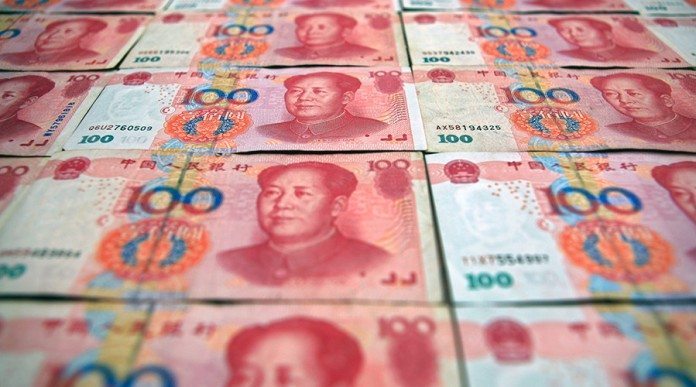
Yuan

When an economy is not performing as expected, it is natural for foreign investors to pull cash out. China witnessed this last year when $1 trillion of capital exited the country. That is obviously giving some sleepless nights to international investors as to what Chinese President Xi Jinping will do now.

Capital Controls?

One of the options being considered is $10 trillion worth of comprehensive capital controls, though historically these have only caused longer term damage. Reports indicate that some of China’s trading partners were in favor of such an option. Chief among the proponents is Bank of Japan Governor, Haruhiko Kuroda, who urged the country to enforce such policies.

The second biggest economy in the world is getting a number of unsolicited advice from its trading partners and commodity producers around the world. Many of its investors were counting on a smooth transition towards a sustainable economy from a high-speed export economy. Many expected the transition to be anchored by consumer spending and services, but a smooth transition is now in doubt.

Capital Exodus Due to Opportunities Abroad

As China has grown since 1990, its stock market has experienced several major sell-offs that ended up reducing wealth by as much as $1.8 trillion. The current selloff is not even the most extreme, though it could get much worse. There does not appear to be any quick fix to address the issues governing its economy currently.

Given that, there is bound to be capital flight, which is nothing but a reflection of available opportunities in rest of the world. In the modern economy where market forces have the upper hand, that is not necessarily a bad thing. Corporations in China spent around $61 billion last year on foreign acquisitions which are taking them to fresh markets and allowing them to move up the ladder. That’s $61 billion not spent domestically, but investment is still a good thing from a market perspective regardless of its direction. Aside from corporate moves, some individual Chinese were also engaged in transferring money abroad on uncertainty around the Yuan as the threat of dramatic devaluation looms large.

Story continues below

Shell (NYSE:RDS.A) Gets A Big Boost With 80% Investors Backing BG Group Deal

Royal Dutch Shell plc (ADR) (NYSE:RDS.A)

At a time when the global oil price is trading at a 12-year low, Royal Dutch Shell plc (NYSE:RDS.A) expressed its own confidence in the industry by getting 80% of its shareholders to back its acquisition of BG Group PLC (OTCMKTS:BRGYY). Most of the votes were cast by proxy and other investors met in The Hague.

Victory for Ben Van Beurden

The winning percentage clearly showed that Shell’s CEO, Ben Van Beurden, was able to prevail over naysayers and convince shareholders of the expected gains from the acquisition. The vote came on the back of some analysts predicting the global oil price to continue to drop down to as low as $10 a barrel. Given such a background, it was undoubtedly a victory for Van Beurden.

Van Beurden said that the acquisition would lift cash flow in addition to improving dividend outlook. He also pointed out that BG Group’s growing production would lift its falling output. Now the deal needs approval from BG Group shareholders before being sent to court for approval, which is expected to happen in mid-February.

Largest LNG Trader

Shell’s acquisition would also turn the company into the largest liquefied natural gas trader in the world. The company has agreed to allocate 0.4454 of its B Shares, as well as a payment of 383 pence for every BG Group share in April last year. This meant offering a premium of 50% as the total transaction value was pegged around $70 billion at the time.

As oil prices started dropping in the last year, Shell’s valuation of the deal also dipped to $51 billion, reflecting its own share price. The company indicated that the slump might be a prolonged one thus suggesting that it would need a longer time than it initially thought to turn a profit on the acquisition. The oil firm said that at $50 per barrel it would be able to add to operating cash flows.

Story continues below

Fed Policy Statement To Lead Headlines In U.S. Today

US markets had a weak open today with the Dow Jones 138 points, nearly a full percent, while S&P 500 futures slipped 0.5% so far. The Nasdaq 100 is the worst of the bunch, down 1.15% in the first hour of trading.

The Fed Clue

The key factor that will drive the U.S. markets today will be commentary from the Federal Reserve as it will conclude its two-day policy meeting. Investors will dissect every word as usual for any change in tone from the central bank in its monetary policy tightening stance. Mostly, it is expected that the Fed will step up rates gradually on the back of tepid growth in global markets and lackluster domestic economic growth in the fourth quarter.

Apart from the Fed’s policy statement, market participants will also look forward to new home sales data, which will be published later today. The U.S. Energy Information Administration will also issue its weekly report on oil supplies, which will be significant for the market as every oil update generates new swings.

Indication from Saudi Arabia and Russia over a possible output cut had supported the oil rally yesterday, but it appears to have fizzled out today.

Mixed global cues

Meanwhile, European stock markets are feeling pressure as oil prices retreat from the previous day’s gains. The Fed policy meeting is also weighing on European markets. On the other hand, most of the Asian indices except Shanghai finished the day on a positive note. The Shanghai Composite Index registered a 0.5% fall and breached its 13-month low. Analysts have noted that China is now giving priority to stabilizing the Yuan and strengthening its economy, steering away from its earlier efforts at inflating stock market sentiment.

Story continues below